Baggage rules feel arbitrary until you see the logic. Cabin bag limits exist because overhead bins are a fixed volume. Weight limits exist because loaders lift bags by hand all day. Liquids rules exist because screening equipment has limits. Once you accept the reasons, packing to the rules is easy.
Know your allowance before you pack
Your allowance is on the booking confirmation, not on the airline's general web page. Fare types differ hugely: the same aircraft can carry passengers with a free 23 kilogram bag and passengers who paid extra just for a wheeled cabin case.
- Checked bag weight is usually 20 to 23 kilograms in economy, and often 32 kilograms in business.
- Cabin bag size is often around 55 by 40 by 20 centimetres, but low cost airlines vary a lot.
- Personal item allowances, meaning a bag that fits under the seat, are increasingly the only free option.
- Total dimensions matter as well as weight. A 158 centimetre linear limit is common for checked bags.
What goes in the cabin
Anything you cannot replace, cannot afford to lose, or would need urgently if the hold bag is delayed. That includes documents, medication, keys, chargers, laptops, cameras, jewellery and one change of clothes.
Spare lithium batteries and power banks must travel in the cabin, never in the hold. If your bag gets gate checked because the bins are full, take the power bank out before you hand it over. Crews will usually remind you but not always.
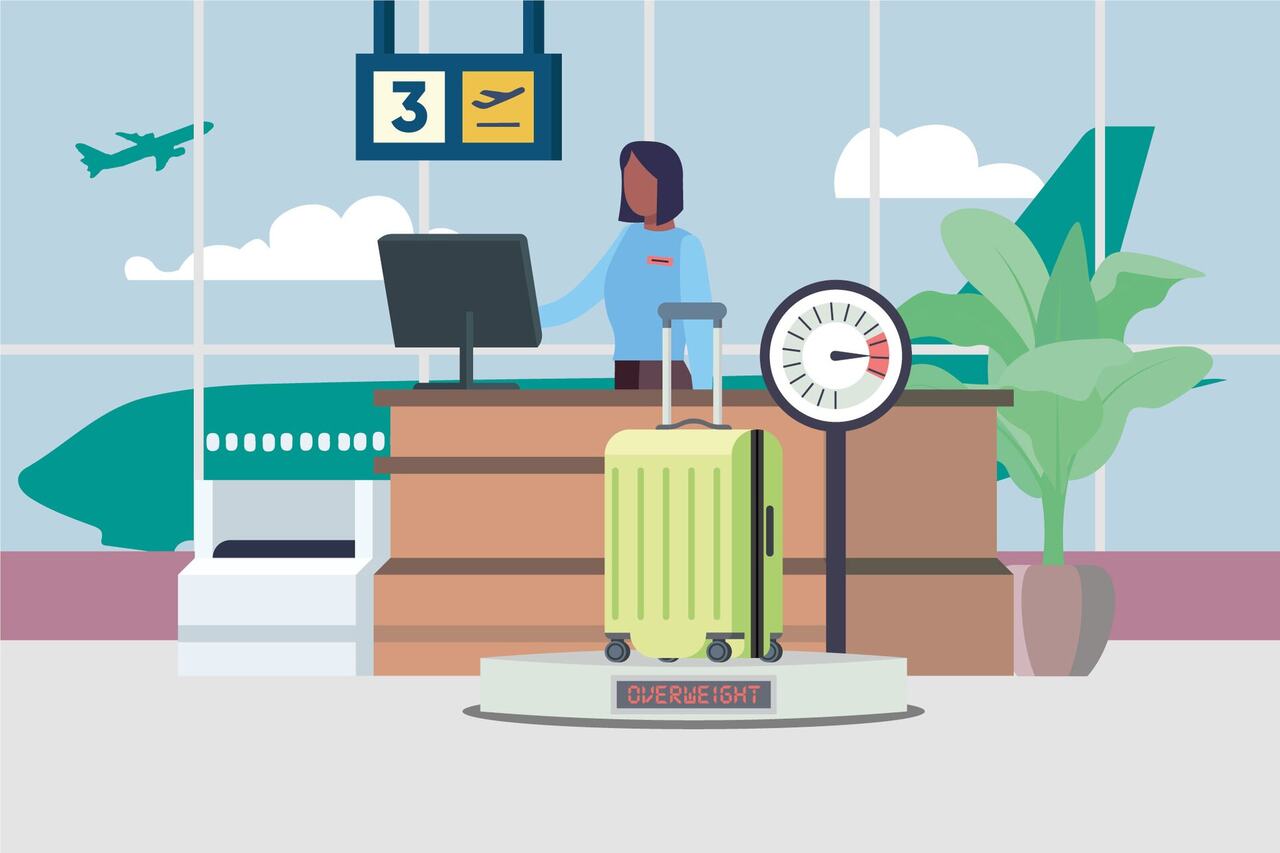
Liquids and the security bag
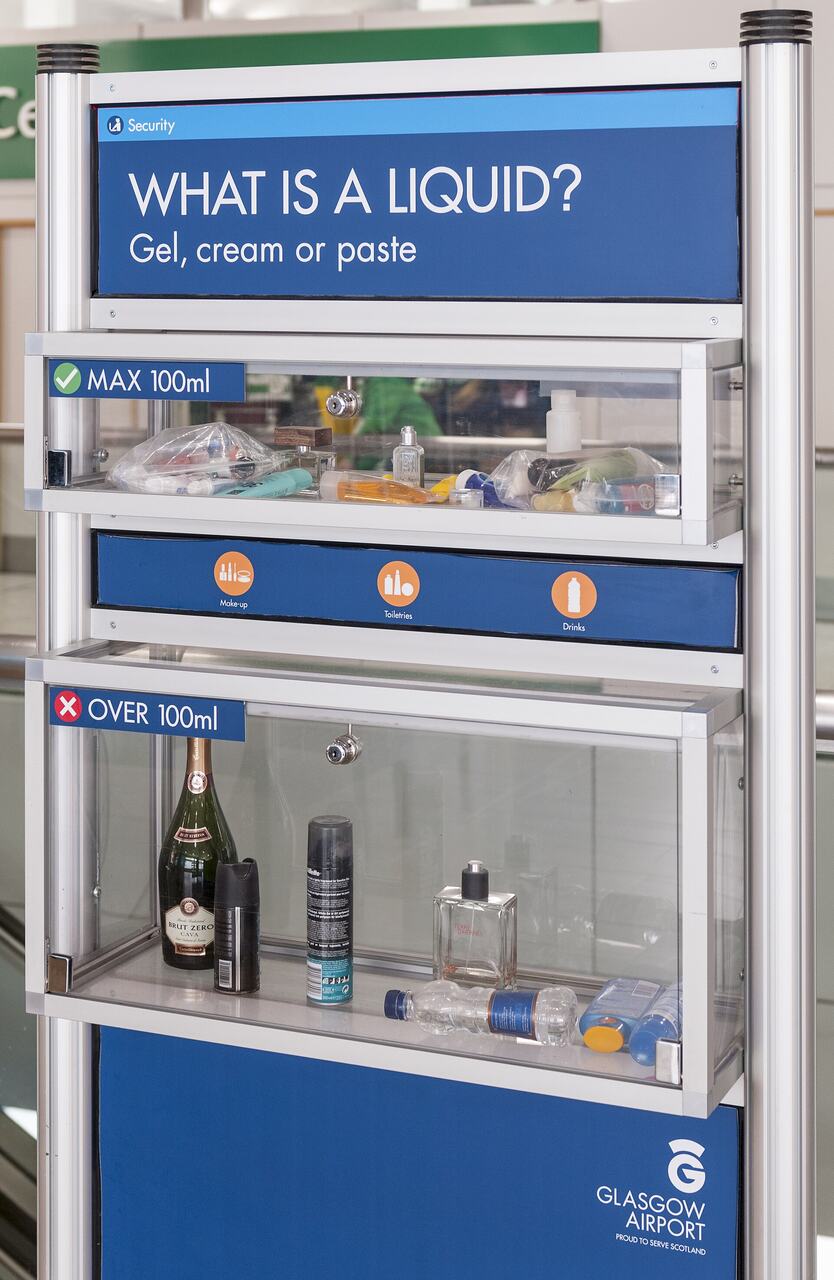
The classic rule allows containers up to 100 millilitres in a single transparent resealable bag of about one litre. Some airports now have scanners that let you keep liquids in the bag, but the old rule still applies in most of the world and even in modernised airports it can come back if a lane is out of service.
Pack the liquids bag where you can grab it in one movement. Digging through a suitcase in the queue is how people leave things behind. Medicines and baby food are usually allowed above the limit, but declare them at the lane rather than hoping nobody notices.
Things people forget are restricted
- Multi tools and small pocket knives, which are cabin prohibited almost everywhere.
- Corkscrews with a blade, and metal cutlery in some countries.
- Aerosols above the size limit, including dry shampoo and large deodorants.
- Sports equipment such as darts, tent pegs and bats.
- E cigarettes, which must be in the cabin and cannot be charged in flight.
If you are unsure about an item, look it up on the destination airport authority page rather than a forum. The rules are national, so what was fine on the outbound flight is not always fine coming back.
Packing for a smooth screening
- 1Electronics near the top so they come out fast if required.
- 2Liquids bag in an outside pocket.
- 3Coins, keys and belt in your jacket pocket before you reach the lane, then put the jacket in the tray.
- 4Nothing loose in your hands. Loose items are the ones left in trays.
- 5Zip everything after screening before you walk away, not while walking.
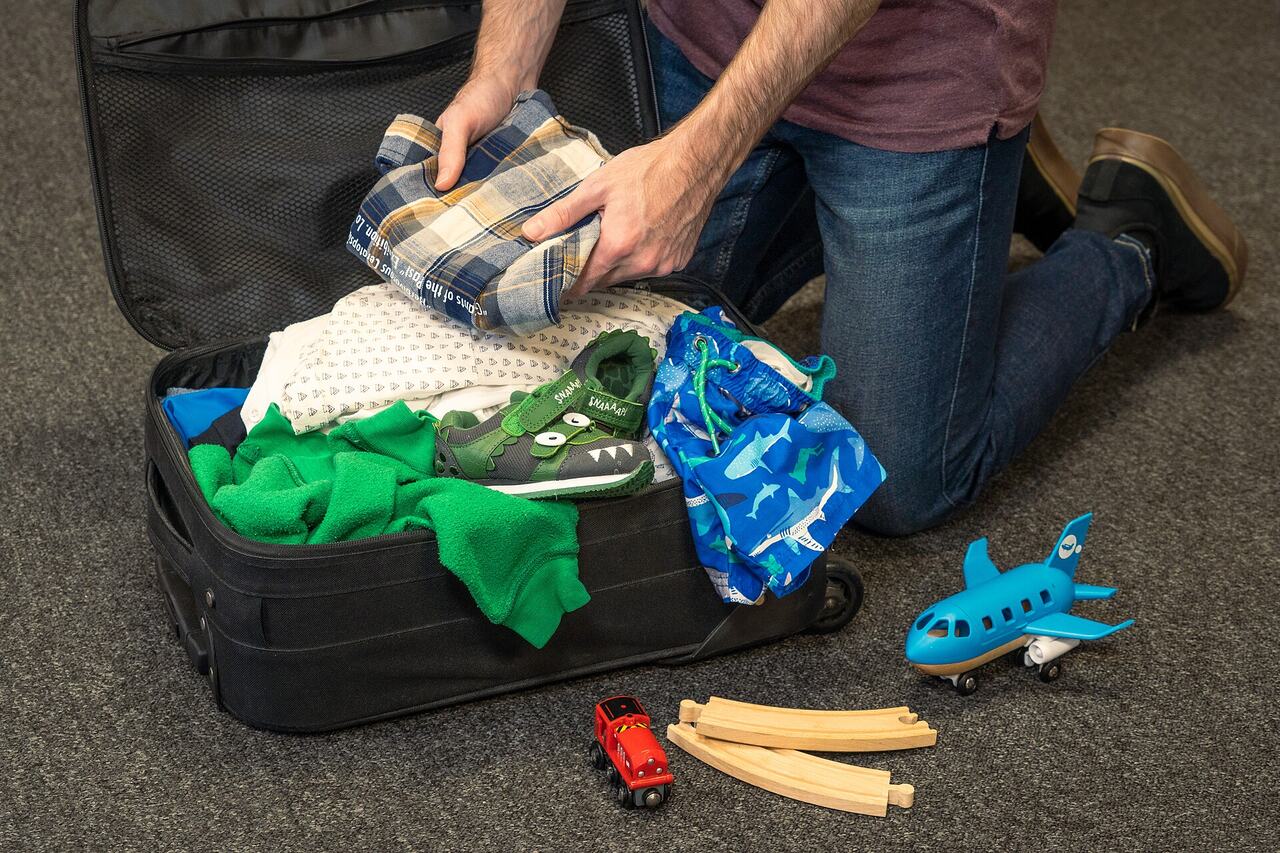
Making the hold bag easier to find and safer
Put a name tag on the outside and a copy of your itinerary inside. If the outside tag is torn off, the sheet inside is how a handler identifies the owner. A bright strap or a distinctive marking also saves you from grabbing the wrong black suitcase at the belt.
Photograph your bag and its contents before you leave. It takes fifteen seconds and it makes a delayed or damaged baggage claim significantly easier to prove.
Fragile and valuable items
Handlers move thousands of bags an hour and cannot treat each one individually, so anything genuinely fragile belongs in the cabin, not the hold. This includes musical instruments below a certain size, camera equipment, and gifts you cannot easily replace. If a fragile item is too large for the cabin, ask the airline about a specialist handling service, which some carriers offer for a fee and which usually involves padded crating rather than the normal conveyor system.
For genuinely high value items such as jewellery or expensive electronics, check your travel insurance's single item limit before you fly rather than after something goes missing. Many policies cap an individual item well below its replacement cost, so a second, specific policy is sometimes worth buying for one particularly valuable piece.
Packing cubes and weight distribution
Packing cubes do not save weight, but they make a bag faster to search, which matters if an officer asks you to open it. Put heavier items low and close to the wheels on a wheeled case, since a top heavy bag is more likely to tip and more likely to be flagged for a manual check when it looks unbalanced on an x ray.
A quick pre-departure baggage check
- Weigh every bag, including the personal item if your fare limits it.
- Confirm the liquids bag is accessible and under the size limit.
- Remove any spare lithium batteries or power banks from checked luggage.
- Attach an outer name tag and an inner contact sheet.
- Photograph the packed bag and anything valuable inside it.
Common questions
- What happens if my bag is one kilo overweight?
- Many agents allow a small margin, but it is at their discretion. Move the heaviest item into your cabin bag rather than relying on goodwill.
- Can I lock my suitcase?
- Yes, though in some countries security may need to open it. A recognised inspection friendly lock avoids having it cut off.
- Is a duty free bottle allowed after security?
- Usually yes if it stays in the sealed tamper evident bag with the receipt visible, but on some connections it will be screened again.
Still stuck on something?
We publish information only, so your airline is always the right first call for a specific booking. If you cannot find an answer on the site, send us the question and we will point you to the right guide.