Tokyo is one of the easiest large cities to move around once you have an IC card and a working data connection. The main adjustments for first time visitors are the size of the stations and the continuing role of cash.
From the airport
- Haneda: the Keikyu line or the Tokyo Monorail, roughly 20 to 30 minutes to central Tokyo.
- Narita: the Narita Express to Tokyo Station and Shinjuku, around an hour.
- Narita: the Keisei Skyliner to Ueno, about 45 minutes, often the fastest option.
- Airport limousine buses go directly to major hotels, which is easier with large luggage.
- Taxis are expensive from Narita, and worth considering only from Haneda late at night.
If you are carrying heavy suitcases, look at luggage forwarding counters in the arrivals hall. For a modest fee your bags are delivered to your hotel, usually the next day, which makes the train journey far more pleasant.
IC cards
Suica and Pasmo are rechargeable cards that work on trains, subways, buses and in convenience stores across much of Japan. You can add them to a phone wallet on many devices, which saves queueing at a machine. Tap in and out at every gate.
Navigating stations
Shinjuku and Tokyo stations are enormous and have dozens of exits. The exit number matters as much as the station name, so note it before you set off. Signage in English is excellent, and the lines are colour coded and numbered, so a station like G09 is unambiguous.
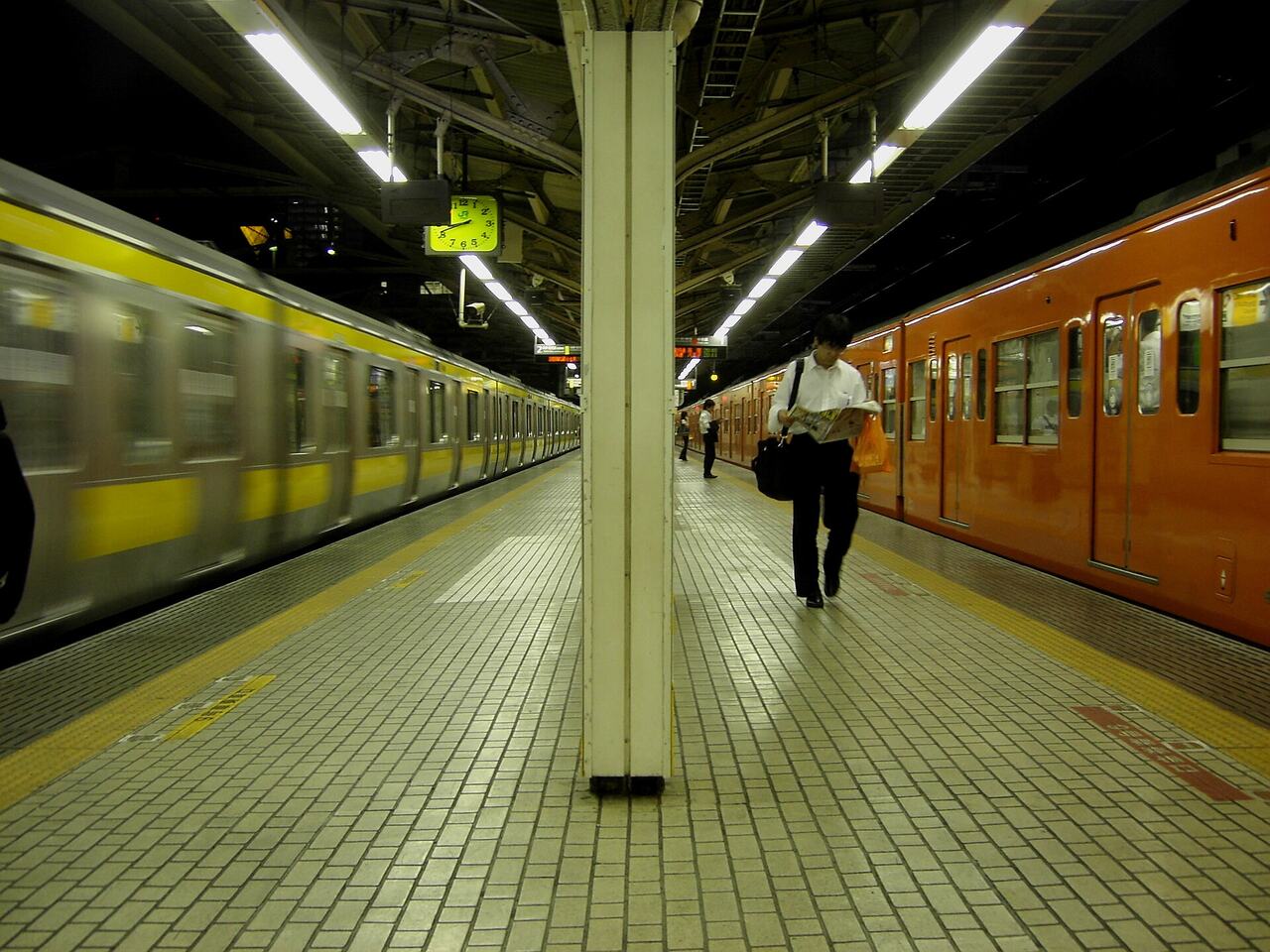
Train apps show platform numbers and exact transfer times, which are reliable to the minute. Allow more time than the app suggests when changing between JR and subway lines, since that often means leaving one station and entering another.
Where to stay
- Shinjuku for transport links and nightlife, though it is busy and loud.
- Shibuya for shopping and young energy, well connected in all directions.
- Ueno or Asakusa for older neighbourhoods and easier access to Narita.
- Tokyo Station area for business travellers and shinkansen departures.
Practical notes
Tipping is not practiced and can cause confusion. Rubbish bins are rare in public, so carry a small bag for waste. Eating while walking is generally avoided. Speak quietly on trains and set your phone to silent.
Rush hour on the busiest lines is genuinely crowded between roughly 07:30 and 09:00. If you can travel outside those times with luggage, do so.
Common questions
- Do I need a Japan Rail Pass?
- Only if you are taking several long distance shinkansen journeys. For a Tokyo only trip it is not worth it.
- Is English widely spoken?
- Signage and transport are well translated. Conversational English is less common, so a translation app is genuinely useful.
- Can I use my IC card in other cities?
- Yes, the main cards are accepted across most major Japanese cities and on many bus networks.
Still stuck on something?
We publish information only, so your airline is always the right first call for a specific booking. If you cannot find an answer on the site, send us the question and we will point you to the right guide.